
Policies & Information

TSCG Group Hero

Student Relational Behaviour Support Policy

“I strongly believe that deep down in every child, however invisible, hostile or rejecting they may seem, is a deep longing to be seen, known and truly understood” (Louise Bomber, 2007)

AuthorDirector of Curriculum – Student Support and Safeguarding/ Assistant Principal Student Support, Safeguarding and Inclusion
ConsultationLeadership Team
ApprovalBoard of the Corporation
Version DateMay 2026
Approved DateJuly 2026
Next ReviewJuly 2028

Contents

  1. Purpose
  2. The principles and rationale underpinning our policy
  3. Our vision
  4. Our expectations for behaviour
  5. How we provide a safe environment for learning
  6. How we promote appropriate behaviour
  7. What we do when things go wrong
  8. Consequences
  9. Roles and Responsibilities
  10. Linked Policies
  11. Review


1. Purpose

This policy sets out our whole college approach to promoting excellent and positive relationships which underpin and support positive behaviour. It explains our approach to relationships, how it links to our core values promoted via our curriculum, and how it helps us make our college a community in which everyone is and feels safe, welcome and at home, so people can learn, discover, and achieve their potential. It also supports staff responding to behaviours using consistent and fair consequences as part of a behaviour continuum.

Effective classroom management is critical to the provision of a safe and supportive learning environment and helps build positive relationships. Research has consistently demonstrated the relationship between effective classroom management and both academic achievement, and teacher and student wellbeing.

Our approach is based on helping everyone to be and feel safe, building relationships, understanding individual needs, and supporting the development of self-regulation skills so everyone can thrive and achieve their full potential whilst and after their time at the college. The policy applies to all adults and students in our college, and we ask parents, carers, our community, and other adults involved to support it.

At the heart of our community are the people and the relationships they build. To make our whole college community work, we expect everyone to treat each other with respect, kindness, and compassion.

We know that meeting these expectations can be challenging. To help, we build a culture in which people can talk about how they feel, ask for help, learn from mistakes, put things right and get the support they need to achieve their potential, manage their mental health, well-being, feelings, and behaviours, so that they become confident, self-regulating adults and positive members of their community, who show tolerance, respect and support for others.

2. The principles and rationale underpinning our policy

  • We see behaviour as a form of communication; to understand it is not to condone it, so we challenge ourselves to understand and meet the need the behaviour communicates, including the need for clear boundaries and support to face mistakes and repair them, build confidence and self-regulation.
  • We have very high standards for behaviour and a relational and restorative approach to enable students to achieve them.
  • We never tolerate behaviour, which is abusive, dangerous or destructive and will always challenge and address it.
  • We are consistent in meeting the relational and developmental needs of our students as individuals.
  • We model the behaviour we expect to see – we don’t shout, we are kind, compassionate and intelligent in our responses to behaviour.
  • We notice what we want more of, rather than listing what someone has got wrong.
  • We don’t use revenge, fear, coercion, bribery, threats, or humiliation.
  • When behaviour is hard to understand and manage, we seek the best possible advice, work out what adjustments and interventions will help meet needs and work together to respond consistently and effectively.
  • A student’s behaviour may be inappropriate or unacceptable but in themselves they are not, so we do not condemn students.
  • All actions have consequences. We define consequences as the natural and logical responses to actions. We define punishment as the use of fear, shame or humiliation or revenge and because of this, we don’t use punishment.

3. Our vision

  • Our own relationships, behaviour, and support for everyone to meet our high expectations for behaviour, will be excellent.
  • All members of our college community will belong and be valued for who they are, their strengths and their needs. They will feel part of our college community. They will learn, grow, discover, and achieve their potential.
  • All members of our college community will be supported according to their needs, helped to talk about and develop a better understanding of their emotions and feelings and how to manage them so they can be resilient, confident, and positive members of our community.
  • When things go wrong and we make mistakes, we will be honest, reflective and seek positive solutions that enable everyone to face and resolve problems and repair damage and relationships.
  • Our college will be a happy and safe place, where relationships are strong, needs are met, everyone feels valued and can learn.
  • Our parents, carers and community will know that we value and respect them and will feel welcomed and included in the life of our college community.

4. Our expectations for behaviour

This policy places relationships and kindness as the foundation for learners to thrive, both academically and in relation to their wellbeing, and is underpinned by our values (Appendix 2):

  • Ambitious
  • Resilient
  • Collaborative
  • Inclusive
  • Respectful

We will be:

  • Ready to be in college, learn and work with others.
  • Respectful, kind, supportive and compassionate
  • Safe, resilient and seek to restore.

5. How we provide a safe environment for learning

  • Our college is a safe, inclusive, welcoming place.
  • We make sure that each of our students is known, recognised for their strengths, and given support for their needs.
  • We know our students’ parents, carers, and our community.
  • We meet and greet all students at the main entrance, as they come into our classrooms and as we walk around the college.
  • We welcome parents and carers into college and listen and respond to their concerns and views.
  • We treat each other with courtesy and respect.
  • We don’t shout. We communicate in a calm and respectful manner, seeking to restore and reconnect.
  • Our vision, values and our students’ achievements are visible as you walk round the college.
  • We encourage empathy by guiding students to make choices based on empathy and mutual respect.
  • We develop routines that help everyone to feel safe.
  • When things go wrong, we are honest and just and always look for solutions that repair damage and relationships.
  • We recognise and celebrate great and/or improved behaviour.
  • There are safe places for people to go when they need calmness or reflection.
  • There are outdoor spaces and/or rooms for students to use their energy safely.
  • Every student has safe people who know them and who they can go to if they need support.

6. How we promote appropriate behaviour

  • We recognise the power of positive attention. We believe that the biggest reward is to be noticed and valued by an adult with whom you have a relationship.
  • We encourage students to have a positive view of themselves and their futures, so that they focus on future rewards and goals rather than always needing immediate rewards.
  • We notice what we want more of, ensuring we communicate what was the specific action that the student did well.
  • We use rewards such as certificates, Teams messages, Award Evenings, trips etc. to celebrate appropriate behaviour.
  • We don’t run a token-based reward economy. We want our students to become resilient and self-regulating, so we do not build dependence on external rewards to motivate or encourage behaviour. Token economies can be too rigid to meet individual needs: for some the token is more important than the behaviour and then loses its initial impact, leading to ‘token inflation.’

7. What we do when things go wrong

  • We don’t use a rigid hierarchy of escalating punishments. The Learner Improvement Process (Appendix 1) is collaborative and intended to promote positive behavioural change.
  • We encourage staff to utilise a range of intervention types to maximise impact and promote positive progression and behavioural change. There may be occasions where the LIP may not be best suited to a student’s individual needs; where this is the case we will utilise a range of alternative intervention types such as letters, multi-agency meetings, engagement with business support function such as the SEND or Pastoral teams.
  • We don’t use fear, threats, bribes, coercion, or humiliation.
  • We don’t turn it into a power struggle – we are adults and it’s not about our egos.
  • We don’t take it personally – even if it feels personal. Staff are supported to recognise the feelings that their work brings up for them, particularly when they are supporting young people who are struggling with their behaviour. We are clear that, though we may be upset or angry, revenge is not an appropriate or productive solution.

These strategies may gain initial compliance but don’t develop students’ self-regulation. Because they work with the fight, flight, freeze, top part of the brain and switch off higher order thinking skills; students don’t internalise a different way of behaving, they simply do what is necessary to survive in that moment. In some cases, where there is pre-existing trauma, this can be counterproductive or damaging.

Firstly, we manage ourselves:

  • We respond in a way designed to help the student to learn to self-regulate, manage the underlying reasons for the behaviour, keep themselves and others safe, repair relationships and get back to learning.
  • When dealing with difficulties, we can start to feel intense emotional responses ourselves. We might feel anger, frustration, upset or anxiety. However, when we are ‘dysregulated’ we can’t support others to regulate, in fact we are more likely to pass on our dysregulation to others. So, we recognise the importance of being able to self-regulate (check-in with yourself, take a breath, get support if needed) prior to managing any difficult situations in the classroom.

This means:

  • We take a breath.
  • We don’t take it personally (even if it feels personal).
  • We are calm to create a sense of safety and order.
  • We role model the behaviour we expect.
  • We notice and praise the behaviour we want to see.
  • We remind students of their good behaviour.
  • We are focused on what the student needs and what anyone who has been negatively affected needs (not our need for control or ‘revenge’).
  • We reflect on the wider context (the student’s experience and perspective).

Secondly, we help the students to:

  • Be and feel physically and psychologically safe – including giving them time and space, other than in an emergency.
  • Regulate their emotions and behaviours, for example by teaching them about breathing, how to release anger in non-destructive ways, naming and understanding their emotions.
  • Reflect and build a better understanding of themselves and others.
  • Deal with underlying issues.
  • Learn other ways to manage themselves.
  • Consider the impact on others.
  • Put it right with others through ‘consequences’ e.g. restorative conversations and repairing damage with the right support to make this solution focused.

Thirdly, we address the issues:

  • We look at what and how the student is learning; consider the appropriateness and effectiveness of the learning; ask and consider whether the student can access, engage and experience any success.
  • We make sure we understand underlying issues and patterns for the student, their network and the college that are giving rise to the behaviour, seeking the input of parents, carers and professionals as needed.
  • We make plans to pre-empt and address issues with those involved and ensure these are clearly communicated, so responses are consistent.
  • We log issues and any positive progress accurately, looking at behaviours and circumstances that may have given rise to them.

If there is a major incident:

  • We may need to place students on a Review Period until we can put in place the strategies above.
  • Following a Reflective Conduct Review, including if any alternative provision has been accessed, we:
    • Make a fresh start.
    • Reintegrate, ensuring that damage and relationships are repaired and that strategies are agreed, shared, and adhere to consistently.

8. Consequences

All actions have consequences. We define consequences as the natural and logical responses to actions. We define punishment as the use of fear, shame or humiliation or revenge and because of this, we don’t use punishment.

We have a consequence system which is clear, transparent and provides structured and supported opportunities to resolve issues. It is recorded so patterns can be understood, and effective interventions implemented [see Appendix 1].

The GROW coaching model is a structured, solution-focused approach used to guide reflective conversations and support personal or professional development. It begins with clarifying the Goal, helping the individual define what they want to achieve in a clear and meaningful way. It then explores the current Reality, encouraging honest reflection on the present situation, strengths, and barriers. From there, the focus shifts to Options, where different possible strategies or actions are generated to move forward. Finally, the model concludes with the Workable way forward (often referred to as “Will”), where the individual commits to specific, achievable actions, building ownership and accountability for next steps.

Where initial support strategies and informal interventions have not led to sufficient progress, concerns will escalate to the Learner Improvement Process (LIP). This provides a more structured and monitored approach, bringing together the learner and key staff to agree clear SMART targets, review progress regularly, and identify any additional support required. The LIP sits within the wider intervention hierarchy and is used selectively to ensure that support is timely, purposeful and focused on enabling the learner to achieve positive progression and improved outcomes.

Sometimes, instead of using the GROW/LIP process, we send letters to students, parents, carers and guardians to address concerns such as vaping, anti-social behaviour, or low attendance. The sample letters provided in the appendix are examples and may be adapted based on individual situations. We strive to consider each person’s unique needs and recognise that receiving such letters can be challenging. Additionally, we might hold informal meetings at first to bring these concerns to attention. We believe in collaborating with parents, carers and guardians to provide a holistic, student centred support network.

We use a consequence which is logical and natural – if you drop litter, you pick it up; if you are rude you apologise; if you don’t do the work, you catch up; if you hurt someone, you repair the relationship. We deal with minor things in the moment. We start afresh after a consequence has been completed.

We use consequences according to what needs to be done to help the student to learn to behave differently and put things right. We log these interventions on our internal college systems to monitor and track progress. This means that we may utilise alternative forms of intervention outside of the LIP/letters such as:

  • Supportive contact to establish reason(s) for concerns
  • Parental/Carer/Guardian call/meeting
  • Early EHCP review, Personal Education Plan (PEP) meeting
  • Multi-agency meeting
  • Tutorial 1-1
  • Fitness to Study meeting or any other relevant, bespoke intervention as agreed by the respective stakeholders to maximise positive progression and impact.
  • *Bespoke interventions must be recorded to allow tracking of learner progress.

All intervention types are marked as complete at the start of an academic year, “new year, fresh start”. Students on “new” courses begin at the start of the LIP irrespective of previous interventions. Returning students in the second year of their study programme have existing GROW/LIPs marked as complete at the start of an academic year but performance related concerns would result in a continuation at the existing or next stage. This gives returning students the opportunity to “show us they have made a positive change”.

If there is a person affected by what has happened, then their feelings (but not their need for revenge) must be dealt with and respected via reflection time and a restorative approach.

We accept that the consequence of some actions under some circumstances mean that the student may not be in college temporarily or permanently. In both cases, we proactively engage in finding long term solutions and track their impact.

When a student is not achieving their potential, a bespoke intervention will follow to support positive change and be recorded on our college systems to allow us to track progress. This will usually be done by the Course Tutor but could be another member of staff as agreed during the departmental at-risk meetings.

9. Roles and Responsibilities

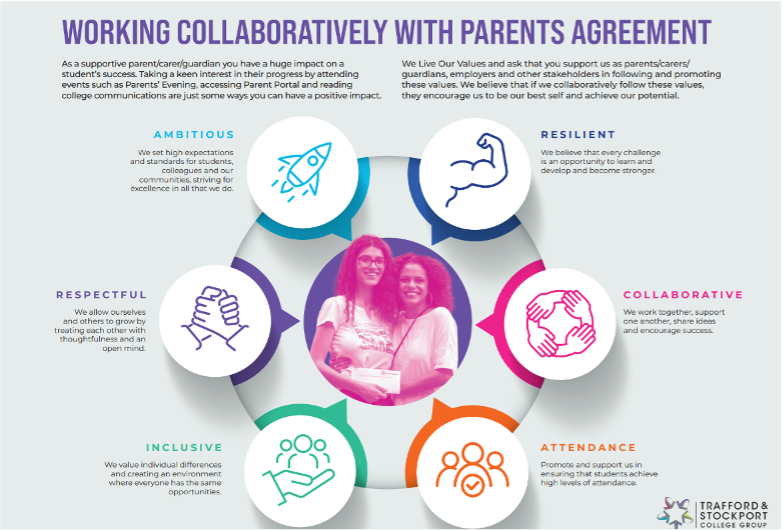
We believe strongly in relational practice which is at the heart of everything we do. Relational practice is embedded within our college values, and we ask that all members of the college community follow and promote them. We believe that if we collaboratively follow these values, they encourage us to be our best self and achieve our potential (Appendix 2).

Students

  • Be present, ready, respectful, and safe.
  • Support, communicate and collaborate as part of the college and wider community.
  • Work collaboratively with key stakeholders to support positive behavioural changes; we can’t do this effectively without your input.
  • Work collaboratively and respectfully with us when things go wrong knowing that actions have consequences; we define consequences as the natural and logical responses to actions.

Parent/Carers/Guardians

  • Work collaboratively with key stakeholders to support positive student behaviour and celebrate success.
  • Work collaboratively and respectfully with us when things go wrong knowing that actions have consequences. We define consequences as the natural and logical responses to actions.

All Staff

  • Work collaboratively with policy stakeholders to impact positive change.
  • Recognise that not all behaviour is a matter of choice and that reasonable adjustments must be made for students where possible.
  • Recognise and reward positive behaviours and celebrate students when they show improvements in their attitudes and behaviours in and out of college.
  • All staff should attend the necessary training, be aware of and practise the trauma informed principles and model positive behaviours.

All leaders and managers

  • Set high expectations and hold aspirations for everyone’s behaviour.
  • Model the behaviour they expect from everyone.
  • Are open, honest, willingly accountable, notice achievement, challenge and support and are able to apologise when they get it wrong.
  • Know their students, notice what they do well and support them to resolve problems when things go wrong.
  • Know their staff and recognise their hard work.
  • Do not fix everything but support the whole team to find solutions, resolve conflict via restorative practice.
  • Ensure that the vision is shared, lived, and developed with staff, students, parents, carers and agencies.
  • Provide flexible and accessible opportunities and a safe space for adults to debrief, reflect, have a professional conversation.
  • Provide high quality CPD for all adults working in college.
  • Work pro-actively with other agencies to ensure plans are joined up and solutions are found.

The Board of the Corporation

  • Review the policy regularly and ensure its effectiveness in supporting and improving positive student behaviour.

Leadership Team

  • Lead by example through accessing our relational training (Belong) and embedding this into practice.
  • Recognise and celebrate examples of good relational practice.
  • Monitor the application of the policy with emphasis on reported incidents.
  • Highlight trends and support good practice to address identified areas of need.
  • Seek to ensure that procedures linked to this policy are adhered to.
  • Support the Learner Improvement Process where necessary.

Directors of Curriculum, Heads of Study and Programme Leaders

  • Lead with standards in terms of relationships, behaviour, and attitudes towards learning.
  • Recognise and celebrate positive behaviour and encourage others to do so.
  • Support all colleagues across TSCG in maintaining the highest standards of behaviour through high quality teaching and learning and consistent implementation of the policy.
  • Ensure that all relationship processes and procedures are adhered to including the following: Learner Improvement Process, Student Attendance and Reflective Conduct Re view Procedures.

Course Tutors

  • Recognise and celebrate good behaviour.
  • Arereflective practitioners and engage in continuous learning around relational practice.
  • Agree standards and values expected/required from TSCG students. Once agreed, the values should be made clearly visible and applied consistently.
  • Monitor individual and group behaviour in classes and take appropriate action to address any issues.
  • Liaise with their Programme Leader, Director of Curriculum/Head of Study and/or pastoral staff regarding relational intervention strategies.
  • Liaise with the appropriate Senior Manager over complex cases of concern.
  • Follow the Learner Improvement Process (LIP) as appropriate to support students.

Director of Curriculum – Student Support and Safeguarding, Centre Managers – Student Support, Safeguarding and Behaviour and Pastoral Teams

  • Recognise and celebrate positive relationships and highlight the positive impact of these.
  • Ensure students understand the standards and values expected and they apply them consistently.
  • Liaise with the Inclusion and Progression team where appropriate to ensure the needs of SEND students are properly understood.
  • Be a reflective practitioner and engage in continuous learning around relational practice.
  • Liaise with curriculum teams regarding intervention strategies.
  • Support learners and curriculum teams with the implementation of the policy.
  • Liaise with the appropriate senior manager over complex cases of concern.
  • Support the Learner Improvement Process (LIP) as appropriate to support students.

10. Linked Policies

  • Learner Improvement Process
  • Student Attendance Procedure
  • Reflective Conduct Review Procedure
  • Student Anti-Bullying and Anti-Harassment Procedure
  • Student Mobile Phone Procedure

11. Review

The Relational Support Policy will be reviewed bi-annually, and all stakeholders will have an opportunity to input their views as part of this review process.

Appendix 1 – Grow and Learner Improvement Process

*All GROW/LIP interventions will be marked as complete at the end of an academic year to give everyone the opportunity to make a positive change, “new year, fresh start”. Students beginning a new course will start the GROW/LIP process from the beginning irrespective of previous interventions. Students returning as part of the same study programme will continue from their existing or next GROW/LIP stage if concerns remain.

Subject to the severity of the concerns students may escalate to a higher-level LIP stage so as the nature of the consequence reflects the level of concern. Our priority is for students to be successful, achieve and be their best self, to ensure interventions are timely and impactful. *Escalation of interventions take place in exceptional circumstances with the combined agreement of relevant Director of Curriculum – Student Support and Safeguarding or Centre Managers – Student Support, Safeguarding and Behaviour.

If a GROW/LIP meeting is not attended the student will have one further opportunity to attend after which point the outcomes will be written and shared in their absence.

GROW/LIP Letters

🌱 Letter 1: GROW (Support Conversation)

GROW = Goal Reality Options Way forward

Supporting [Student Name] – GROW Conversation

Dear Parent/Carer,

I hope you are well.

We recently had a short support conversation (GROW) with [Student Name]. This is a normal part of how we help students improve.

We talked about:

  • what is going well
  • what could be better
  • how we can help
  • what [Student Name] will try next

This is not a punishment. It is to support your child.

You can help by:

  • asking your child about their targets
  • encouraging them to try their best

If you have any questions, please contact me.

Thank you for your support.

Kind regards,
[Your Name][Role]

📝 Letter 2: LIP 1 (Learner Improvement Plan 1)

LIP = Learner Improvement Plan

Support Plan for [Student Name] – LIP 1

Dear Parent/Carer,

I am writing to let you know that [Student Name] is now on a Learner Improvement Plan (LIP 1). This means we are giving extra support to help them improve.

We have agreed:

  • clear, simple targets 🎯
  • extra support in lessons 🤝
  • regular check-ins 🔁

Our aim is to help [Student Name] succeed.

You can support by:

  • talking about their targets at home
  • encouraging good routines (sleep, homework, attendance)

We will review progress soon and keep you updated. Please contact me if you would like to discuss this.

Kind regards,
[Your Name][Role]

📊 Letter 3: Learner Improvement Plan 2 – LIP 2 (Increased Support)

LIP = Learner Improvement Plan

Increased Support for [Student Name] – LIP 2

Dear Parent/Carer,

I am writing to update you that [Student Name] has moved to LIP 2. This means we are increasing support to help them get back on track.

We are now:

  • setting more structured targets 📋
  • providing more staff support 👩‍🏫
  • checking progress more often 🔁

We want to work together with you to support your child.

You can help by:

  • checking in with your child about their progress
  • encouraging them to follow their targets
  • contacting us if you have concerns

We will continue to review progress and keep you informed.

Thank you for your continued support.

Kind regards,
[Your Name][Role]

Letter 4: Learner Improvement Plan 3 – LIP 3

LIP = Learner Improvement Plan

Important Support Update for [Student Name] – LIP 3

Dear Parent/Carer,

I am writing to inform you that [Student Name] has now moved to LIP 3. This is a more serious stage, but our focus is still on support and improvement.

We will:

  • arrange a meeting with you 👥
  • set clear and important targets 📄
  • agree a timescale for improvement ⏰

It is important that we work together to support [Student Name].

You can help by:

  • attending the meeting
  • supporting the agreed targets at home
  • encouraging positive routines and effort

We are committed to helping your child succeed and will support them throughout.

Please contact us if you have any questions.

Kind regards,
[Your Name][Role]
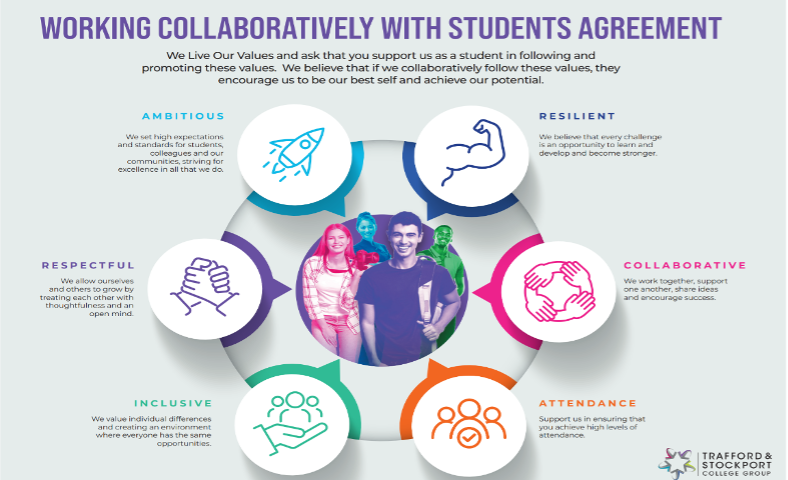
Appendix 2 – Student & Parent Agreement


Appendix 3 – Student & Parent Final Written Warning Letter

*letters may be adapted to suit the individual needs of the students to ensure clarity of communication.

When students do not live our values or support us in following and promoting them these actions have consequences: we define consequences as the natural and logical responses to actions. Students who are at immediate risk of not achieving will receive the below letter (a copy will also be sent to parents/carers). If agreed targets are not met, then this will result in withdrawal.

Dear [parent or student name if over 18]

We live our values and ask that you support us as a student in following and promoting these values. We believe if we collaboratively follow these values, they encourage us to be our best self and achieve our potential.

You have not demonstrated sufficiently to date that you are able to follow our student agreement (Student Relational Behaviour Support Policy, Appendix 2) and as a result we are writing to inform that you will be withdrawn from your chosen programme of study if you are not able to meet the agreed targets by [date].

We have included the contact details for our careers team and other pastoral services should you require further support.

Regards
[staff name]
[role]
[contact details]
Careers team email: careers@tscg.ac.uk

Appendix 4 – Vaping/smoking and Antisocial Behaviour.

*letters may be adapted to suit the individual needs of the students to ensure clarity of communication.

To promote a respectful and professional learning environment within our college community we ask that smoking/vaping takes place only in the designated areas. Instances of vaping outside of the designated smoking/vaping areas impacts the health of others and will not be tolerated. We will issue a letter home to notify of instances of smoking/vaping. On the third instance students may be excluded.

In addition, any instance of antisocial behaviour on campus which is not seen as gross misconduct may result in a letter from the principal. This serves as a warning and any future occurrences may result in permanent exclusion. These letters are bespoken to the incident in question.

Vaping initial letter:

Dear Parent/Guardian/Student (if over 18),

We are writing to inform you that (learner name) has been found vaping on college premises outside of the designated smoking/vaping areas. Vaping outside of the designated smoking/vaping areas is strictly prohibited. We aim to provide a safe and pleasant environment for our students and the presence of vape smoke, and its associated negative impacts on health, are not in keeping with this. In addition, we intend to promote professionalism and respect to prepare learners for the workplace – vaping on site is not in line with these values.

We work collaboratively with support services such as Early Break and Mosaic and can facilitate a support session with them if required. These services provide specialist advice and guidance to young people, adults, parents and carers about the risks associated with vaping and how to quit. Please contact safeguarding@tscg.ac.uk for further information.

This letter serves as an initial, formal warning and if this behaviour is observed on site again outside of the designated smoking/vaping areas we will issue a final warning which will ultimately lead to exclusion without the opportunity to appeal.

If you require further information surround vaping, please visit Vapes | FRANK (talktofrank.com).

Yours Sincerely
Staff Name
Role

Vaping Final warning:

Dear Parent/Guardian/Student (if over 18),

We are writing to inform you that (learner name) has been found vaping on college premises outside of the designated smoking/vaping areas for a second time. Vaping outside of the designated smoking areas is strictly prohibited. We aim to provide a safe and pleasant environment for our students and the presence of vape smoke, and its associated negative impacts on health, are not in keeping with this. In addition, we intend to promote professionalism and respect to prepare learners for the workplace – vaping on site is not in line with these values.

We work collaboratively with support services such as Early Break and Mosaic and can facilitate a support session with them if required. These services provide specialist advice and guidance to young people, adults, parents and carers about the risks associated with vaping and how to quit. Please contact safeguarding@tcg.ac.uk for further information.

This letter serves as a final warning and if this behaviour is observed on site again outside of the designated smoking/vaping areas this will lead to exclusion without the opportunity to appeal.

If you require further information surround vaping, please visit Vapes | FRANK (talktofrank.com).

Yours Sincerely
Staff Name
Role

Appendix 5 – sub-50% attendance

*letters may be adapted to suit the individual needs of the students to ensure clarity of communication.

Attendance to college is vital for learners to achieve their potential. Learners with less than 50% attendance will receive the letter below to action positive intervention at the earliest opportunity.

Dear

Your current college attendance is below 50% and as a result of this it is highly unlikely you will achieve your qualification if this poor attendance continues. We expect all students to attend all lessons to ensure they receive the full suite of teaching and learning to maximise their potential.

We will have no further option than to withdraw your place at college unless you arrange a meeting with …….. in 10 working days and show a significant improvement in both attendance and commitment moving forward.

If you would like a further meeting to discuss this or the opportunity to seek advice from our careers team, please get in touch and we can facilitate this support.

If no contact with TSCG is made in 10 working days, then we will process your withdrawal.

Your Sincerely

Appendix 6 – Inappropriate Mobile Phone use in Lessons

*letters may be adapted to suit the individual needs of the students to ensure clarity of communication.

Dear

Re: Formal Warning – Inappropriate Mobile Phone Use in Lessons

This letter is to formally notify you that concerns have been raised regarding your persistent negative use of a mobile phone during lessons, despite clear expectations and instructions from teaching staff.

The college recognises that mobile phones can, in some circumstances, be used as a learning tool. However, your continued phone use during lessons has been identified as disruptive and not in line with the college’s expectations for behaviour, respect, and engagement in learning.

You have been reminded by staff to put your phone away during lessons and to follow reasonable instructions. Your failure to do so represents a breach of the college’s values and, when instructions from staff are not followed, this behaviour may be classified as gross misconduct under the college Student Relational Behaviour Support Policy.

Persistent mobile phone use in class has a detrimental impact on learning. It distracts you from fully engaging with lesson content, reduces your ability to make progress, and can disrupt the learning of others. It also negatively affects the professional learning relationship between you and your tutor and teachers, who are working to support your success and development.

This letter therefore serves as a formal warning. You are expected to:

Keep your mobile phone out of sight and not in use during lessons unless explicitly authorised by a member of staff for learning purposes.

Follow all reasonable instructions given by staff promptly and respectfully.

Engage positively and consistently in your learning.

Please be aware that any further incidents of inappropriate phone use, or failure to follow staff instructions, will be taken seriously and may result in further disciplinary action. This may include escalation of sanctions, up to and including being asked to leave the college.

The college wants you to succeed and to remain part of the learning community. We strongly encourage you to reflect on this warning and to take the necessary steps to demonstrate positive behaviour and commitment to your studies.

If you require support in managing distractions or have concerns affecting your engagement in lessons, you are encouraged to speak with your tutor or Learners Services, who are available to help.

Yours sincerely,

Appendix 7 – Student Dress Code Guidance

Some students can feel quite nervous about picking the right outfit for college, but the most important thing is that you feel comfortable.

We don’t expect you to dress formally for college, but obviously common sense applies. In general, students should be clean, smartly dressed and appropriate for work.

Studies have shown that non-verbal communication is at least as important as verbal communication. Styles of dress should inspire confidence and add to, not detract from, effective and sensitive communication. As such, the following must be avoided:

  • Offensive/inflammatory slogans/imagery;
  • Revealing clothing or that which does not suitably cover underwear;
  • Clothing that covers most of the face*.

* Peaked caps and hoods are examples of unacceptable clothing in this context as they do not allow identification of the individual and therefore present a safeguarding risk. Clothing like the hijab that only obscures the hair, and the top of the head is, however, acceptable. Staff reserve the right to ask learners to remove headwear for the purposes of identification.

Appendix 8: Guidance for Managing Inappropriate Mobile Phone Use (see Student Mobile Phone Procedure)

Purpose

This guidance supports staff to manage inappropriate mobile phone use in a consistent, proportionate and relational way, ensuring learning time is protected while maintaining positive relationships, learner dignity and inclusion. Mobile phone management is not about punishment, but about supporting engagement, focus and mutual respect within learning environments.

Core Principles

All responses to mobile phone use should be:

  • Consistent – clear expectations which are applied fairly across learners, groups and campuses
  • Calm and respectful – avoiding confrontation or public shaming
  • Proportionate – matching the response to the behaviour and context
  • Restorative – focused on learning and future success, not sanction alone
  • Inclusive – recognising that some learners use phones as coping or accessibility tools

Clear Expectations for Learners

Teachers should explicitly reinforce the following expectations:

  • Mobile phones must not be used during teaching and learning unless:
    • The teacher has given explicit permission for learning purposes
    • The phone is required as a reasonable adjustment (e.g. assistive technology, medical need)
  • Phones should be:
    • On silent
    • Out of sight (e.g. bag or pocket)
  • Headphones and smartwatches are subject to the same expectations

These expectations should be clearly stated at the start of programmes, revisited regularly and modelled consistently by staff.

Step-by-Step Staff Response

Issue Strategy Example Language Action
1. Low-Level Reminder (First Instance)
  • Use a non-verbal cue or calm verbal reminder
  • Address the behaviour, not the learner
  • Avoid interrupting learning flow where possible
  • “Phones away please – thank you.”
  • “Let’s stay focused on the task.”
  • No recording or escalation is required at this stage.
2. Clear Direction and Choice (Repeated Use)
  • Speak quietly and respectfully
  • Give a clear instruction and choice
  • Reinforce expectations and impact on learning
  • “I’ve asked once already. Put your phone away so you can stay involved – thank you.” 
  • “You can put your phone away and continue, or we can talk about this after the session.” 
  • The teacher gives the learner two clear choices: 
  • Put the phone away, or 
  • Place the phone face down on the desk, without touching it until authorised to do so
  • The expectation is stated neutrally, without argument or debate. It also allows for the student to ‘keep control of their property’ as this is often a significant cause of heightened conflict. 
  • This may be logged as a low-level behaviour concern on ProMonitor if repeated. 
3. Relational Follow-Up (Persistent or Disruptive Use)
  • Avoid public confrontation 
  • Arrange a brief one-to-one conversation (in or after the session) 
  • Explore why the phone use is occurring 
  • Key questions 
  • “What’s making it hard to stay off your phone today?” 
  • “What would help you stay focused in lessons?” 
  • Possible outcomes 
  • Agreed strategies (e.g. phone placed on desk face down, stored at front) 
  • Referral to mentor or PL if patterns emerge 
  • Reasonable adjustments identified if appropriate 
  • Logged on ProMonitor.

4. Escalation (Only Where Necessary) 

Escalation should be used only where phone use is persistent, defiant, or significantly disrupts learning. 

  • Removal from the learning space following local procedures 
  • Reflective or restorative conversation (not punitive)
  • Behaviour support intervention in line with policy (e.g. GROW/LIP), involving parents/carers 
Clear outcomes discussed with learner in a meeting.  
  • GROW/LIP – PL/DoC involvement  
  • Phones should not normally be confiscated by staff unless there is a clear safety risk or senior authorisation. 

Situations Requiring Immediate Action

Immediate intervention is required where phone use involves:

  • Filming or photographing others without consent
  • Online harassment, bullying or discriminatory behaviour
  • Viewing or sharing inappropriate or unsafe content
  • Disruption that compromises safety or dignity

In these cases, staff should:

  • Follow behaviour and safeguarding procedures immediately
  • Seek support from the Centre Manager or senior staff

Inclusion and Reasonable Adjustments

Staff must be mindful that some learners may:

  • Use phones as part of an EHCP or reasonable adjustment
  • Rely on phones for medical needs, anxiety regulation, communication or accessibility

Where this is the case:

  • Adjustments should be agreed in advance with the Inclusion team and teaching staff
  • Expectations should be clear but flexible
  • Learners should not be challenged publicly about agreed adjustments

Staff Conduct and Modelling

Staff should:

  • Model appropriate phone use themselves
  • Avoid using personal phones during teaching time unless necessary
  • Challenge phone use consistently to avoid mixed messages
  • Consistency across teams and campuses is essential.

Review and Monitoring

  • Patterns of phone misuse should be reviewed by curriculum teams
  • Data should inform curriculum routines and support strategies
  • Learner voice should be used to refine practice

Appendix 9 – Support information.

If you need help deciding what the next steps should be, please contact the services below, these can help you get back on track if you are not in education, employment or training:

Manchester Resident: https://careerconnect.org.uk/

Trafford Resident: Connexions Trafford (http://connexions-trafford.co.uk)

Stockport Resident: https://www.stockport.gov.uk/careers-information-advice-and-guidance/contact-us-education-and-careers

Finance and General Support:

I want to get an apprenticeship or job:

For apprenticeship advice please visit https://www.apprenticeships.gov.uk/apprentices

To search for apprenticeships https://www.gov.uk/apply-apprenticeship

For careers advice https://nationalcareers.service.gov.uk/ or speak to a qualified careers adviser using their helpline 0800 100 900

For useful information about jobs and careers, how to make a CV and tips on applications please visit Stockport Jobs Match https://stockport-jobsmatch.co.uk or https://gmacs.co.uk/

Pastoral support: please contact safeguarding@tscg.ac.uk if you want to speak to a member of the pastoral team.

Appendix 9 – Guidance for Managing Incidents

Purpose

This guidance supports staff to manage incidents in a consistent, proportionate and relational way, while maintaining positive relationships, learner dignity and inclusion. Incident management is not about punishment, but about supporting engagement, focus and mutual respect within learning environments.

Core Principles

All responses to Incidents should be:

  • Consistent – clear expectations which are applied fairly across learners, groups and campuses
  • Calm and respectful – avoiding confrontation or public shaming
  • Proportionate – matching the response to the behaviour and context
  • Restorative – focused on learning and future success, not sanction alone
  • Inclusive – recognising that some learners use phones as coping or accessibility tools

Clear Expectations for Learners

Staff should explicitly reinforce the college values and respectfully challenge any behaviours that are not in line with these.

Student Incident Guidance

A student incident is a potential example of gross misconduct which requires further investigation by relevant managers. An incident report form can be completed by any manager, safeguarding or the security team. Any other staff member must consult with their relevant line manager who subject to agreement will submit an incident report form on their behalf.

Issue Strategy Example Language Action/s
1. Low-Level Reminder (First Instance)
  • Use a non-verbal cue or calm verbal reminder
  • Address the behaviour, not the learner
  • “ID badge to be worn around your neck, clearly visible – thank you.”
  • “We show respect and don’t drop litter around here – thank you.”
  • “We use Professional language here – thank you.”
No recording or escalation is required at this stage.
2. Clear Direction and Choice (Repeated Use)
  • Speak slowly, quietly and respectfully
  • Give a clear instruction and choice
  • Reinforce expectations and college values
  • “I’ve asked you once already. Put your ID badge on – thank you.”
  • “You can put your ID badge on and continue, or we can discuss further next steps later.”
This may be logged as a low-level behaviour concern on ProMonitor if repeated.

3. Escalation (Only Where Necessary)

Escalation should be used only where the learner is defiant, the behaviour is not in line with our college values and there is the potential of gross misconduct.

  • Removal from the space following local procedures – “somewhere safe with someone”
  • Reflective or restorative conversation (not punitive)
  • Behaviour support intervention in line with the relevant Policy (Student Relational Behaviour Support Policy or Reflective Conduct Review Procedure), involving relevant stakeholders
Clear outcomes discussed with learner and recorded.

Collect relevant statements from those involved and collaborate with Security to gather relevant CCTV imagery

GROW/LIP – PL/DoC involvement

OR

Send home/Review Period/Reflective Conduct Review Meeting Parent/Carer/Guardian call required if sending home.

Safeguarding Incidents should be recorded on CPOMS as per the Child Protection and Safeguarding Vulnerable Adults Policy.

Once an incident has been logged it is the responsibility of the primary manager to complete relevant actions, update the incident log and close.

Other types of Incidents

  • Fire Alarm
  • Evacuation
  • Intruder Alarm
  • Intruder
  • Health and Safety
  • Building Continuity Issue

Step-by-Step Staff Response (see Incident Response Guide)

Inclusion and Reasonable Adjustments

Staff must be mindful that some learners may:

  • Experience vulnerabilities which impact their behavioural response
  • Be dysregulated in the moment and their behaviours are a form of communication for an unmet need
  • Some learners maybe wearing headphones and unable to hear instructions given

Where this is the case:

  • Adjustments should be made where practically possible
  • Expectations should be clear but flexible
  • Learners should be challenged where possible somewhere safe with someone

Staff Conduct and Modelling

Staff should:

  • Model appropriate behaviours themselves
  • Challenge inappropriate behaviour consistently to avoid mixed messages

Consistency across teams and campuses is essential.

Review and Monitoring

  • Patterns of incidents should be reviewed by curriculum teams, managers and Governors
  • Data should inform curriculum routines and support strategies
  • Learner voice should be used to refine practice

Examples of gross misconduct.

  1. Theft or attempted theft.
  2. Serious misrepresentation at any time of qualifications held or personal information such as identity.
  3. The use/possession of alcohol, drugs or other self-administered substances.
  4. The threat/use/possession of weapons/items intended to cause harm to another.
  5. Misuse of the college ID card – this may include allowing access of non-students onto campus.
  6. Physical, verbal or sexual assault including digital communications.
  7. Malicious or wilful damage to property.
  8. Conviction of a civil or criminal offence which substantially affects capacity to continue studies.
  9. Serious forms of harassment, bullying or inciting violence.
  10. Serious breaches of Health and Safety Regulations.
  11. Serious misuse of the College’s computer facilities e.g. the creation/ transmission of inappropriate or obscene material, intentional introduction of viruses etc.
  12. Cheating during examinations or in the completion of course work.
  13. Safeguarding concern – where allowing the student to remain in college would seriously harm the education or welfare of themselves, other students or staff in the college.
  14. Bringing the college and the college values into disrepute, e.g. sharing discriminatory views on social media, recording/capturing inappropriate content on college site, sharing college content without consent or inciting hate. This includes incidents which may occur outside of the college campus.

*this list is not exhaustive.

Incident reporting process

Witness statements

Witness statements are required to ensure that investigators have an accurate account from those involved.  Statements are collected using the “Statement Form”.  Learners scan the QR code below to provide supporting information or click here to complete a witness statement form.  This information is available to investigating staff by clicking here to view witness statement responses.